This edition of The Current is a bit lengthy as it covers a number of topics. Below is an index of the articles. It should be easy to scroll through for an article of interest by looking for the big shaded area that starts each article.
- The feature article is The Growing Vulnerability of Arch Cape’s Water and Sanitary Services
- Board Updates
- Allocation of Arch Cape-generated TLT dollars to Arch Cape for its Public Safety Services
- Cannon View Park’s request for a partial refund of the District Administrator Levy
- Consolidate Water District & CVP water: Forming a committee to assess
- Monitoring Household Water Usage (Tips & Tricks for Homeowners)
- Matt’s Column – Repairing the Aging Underground Infrastructure: Manholes. The videos are absolutely wonderful in explaining what is happening and needs to be done
The Growing Vulnerability of Arch Cape’s Water and Sanitary Services
Executive Summary
The staffing situation facing the Arch Cape Water and Sanitary Districts threatens the reliable delivery of drinking water and treatment of wastewater—essential services that directly affect the livability of our community and the value of our properties.
A prolonged illness, injury, resignation, or other circumstance that makes Matt, our sole employee and operator, unavailable could leave the Districts without anyone to reliably operate these systems. The consequences could be substantial, disrupting everyday life and the viability of short term rentals. A prolonged disruption could also negatively affect property values.
To reduce this vulnerability and ensure adequate qualified staffing over the long term, steps are being taken in three areas that warrant timely attention, including consideration of an alternative staffing model. Because addressing these challenges may increase the Districts’ operating costs, it is important to continue to explore additional sources of revenue to help limit the financial burden on ratepayers.
Addressing these areas now makes good sense. If we wait until a staffing crisis occurs, options available to us today may no longer exist, and those that remain could take months or even years to implement. During that time, our ability to reliably provide essential water and sanitation services could be seriously compromised.
These are significant issues that the community will need to address together. The volunteers who serve on our Water and Sanitary Boards are working to address these issues but cannot resolve them alone. They will need the engagement, support, and collaboration of the broader Arch Cape community as they work toward solutions that will sustain these essential services.
1. Staffing — Critical Concern
Staffing Ongoing Operations
For more than 3 years, the 24-hour-a-day, 365-day-a-year operation of Arch Cape’s water and wastewater systems has been dependent upon one person: Matt Gardner.
During that time, Matt has not taken a single vacation away from the District. His only respite has been 3-4 days off every four to six weeks when a relief operator has been available. And even then while trying to catch up on sleep, Matt has remained on call.
Until recently, Matt’s already limited downtime was at risk of disappearing. The relief operator will no longer be available after October. Collin has done excellent work in finding other interested and qualified operators and his efforts appear to have been fruitful.
Matt’s responsibilities extend far beyond operating the water and sanitary plants. They include maintaining District equipment, meeting regulatory requirements, responding to water and sewer line breaks, repairing the underground infrastructure (see his video artical below) and keeping pumps and other essential equipment operating during storms and power outages—often well into nights and weekends. He also manages outside contractors who perform specialized work that has historically been beyond the Districts’ in-house expertise or equipment capabilities.
A prolonged illness, injury, resignation, or other circumstance that make Matt unavailable could leave the Districts without anyone qualified to reliably operate our drinking water and wastewater systems. This leaves Arch Cape with a single point of failure for two essential public utilities
Over the past several years, District job postings have consistently failed to attract qualified, experienced applicants. Efforts to hire and train inexperienced staff have also met with limited success. A temporary employee, shared with another contractor, provided valuable assistance for a period of time but within six months left for a “dream job” opportunity outside the industry. Also over that time period, two trainees were hired at different times and neither employment arrangement proved successful. Recruiting and training new employees requires a substantial investment of Matt’s time, adding to an already unreasonable workload. Given the Districts’ experience in this regard, repeatedly recruiting and training employees who remain only briefly is neither a sustainable use of District funds nor of Matt’s increasingly limited time.
The near impossibility of recruiting staff is not unique to Arch Cape. Qualified water and wastewater operators are in short supply throughout Oregon, with numerous positions remaining unfilled for extended periods. All of our neighboring utilities are also short-staffed. The good news for them is that they are operating with more than one staff member. Arch Cape is not.
Traditional hiring expectations and practices no longer appear to be working as they once did, in Arch Cape or elsewhere. The challenge of finding motivated employees willing to work hard and pursue long-term career development extends well beyond the water and sanitation industry and reflects broader changes in the workforce. These changes are unlikely to reverse in the near term, suggesting that relying on conventional hiring practices alone may no longer be sufficient. The Districts will need to adapt to this changing employment environment and as such will be considering new approaches to how the Districts are staffed & operated.
Staffing Administration
In July 2023, the two volunteer Board Chairs took on administrative responsibility for the Districts to allow Matt to focus solely on Operations and the much needed rejuvenation of the plants, equipment and underground infrastructure. Those responsibilities include financial oversight, budgeting, contracting, regulatory requirements, planning, Board support and project management for the utilities and for the forest-watershed. In July 2025, the Districts contracted with Collin Stelzig as a part-time District Administrator to relieve the Board Chairs of that work.
Collin’s two-year contract ends in June 2027.
Although the Boards and Budget Committee established funding for an Administrator position in the long-range budget, finding a qualified replacement may be difficult. The previous RFP produced only three candidates, and Collin was the only one considered qualified.
The Districts therefore face two related staffing vulnerabilities: 1) maintaining an adequate level of qualified personnel to operate and maintain the physical systems and 2) maintaining the administrative capacity to manage the business function.
Discussions-to-date with neighboring utilities to augment our staff for periods longer than 14 days have not been fruitful.
The experience of the past several years has raised a fundamental question that was considered by the just previous Board and is under consideration by the current Board:
Is it reasonable to assume that the Districts can continue operating under the current “in house” staffing model where the Districts hire, train and retain qualified staff?
2. Revenue — Growing Concern
The Districts’ long-range financial plans anticipate continued rate increases of 4-6% each year based largely upon an “in-house” staffing model. If the Districts are able to continue with this model, attracting qualified operators may require substantially higher compensation, housing assistance or signing incentives. All of these will result in higher rate increases.
An “in-house” staffing model may not be viable and sustainable. Other models to include contracting with a private operator or sharing personnel & operations with neighboring communities should be considered. The costs of these alternatives is likely to be significantly higher than the rates projected in the current financial plan.
Any one of these approaches is likely to increase cost beyond current projections and place additional pressure on Arch Cape ratepayers. As such, it is more than prudent for the District to pursue alternative revenue sources.
Allocation of Transient Lodging Tax (TLT) to Arch Cape for Public Safety Services
Clatsop County Ordinance #25-12 was recently changed to allocate Transient Lodging Tax revenue to public safety services around the County that are provided in support of tourism and are strained by tourism. One of the County’s Guiding “Equity” Principles is
Ensure adequate funding for reliable, effective, and efficient public safety services to residents and visitors”
Arch Cape provides and directly supports the below Public Safety Services and yet receive none of the Arch Cape generated TLT revenue. Cities in Clatsop County provide a number of these Service and so pay less TLT to Clatsop County.
- Drinking Water for residential habitability
- Waste Water Processing for residential habitability and environmental protection
- Water and Sanitation Services to the Cannon Beach Rural Fire Protection District Fire Station in Arch Cape (at no charge)
- Water used to train Cannon Beach Rural Fire Protection District (at no charge)
- Water used by the Cannon Beach Rural Fire Protection District to fight fires in the Arch Cape vicinity (at no charge)
- Build and maintain two landing zones in the Arch Cape Forest-Watershed for life flight and coast guard helicopters (at no charge)
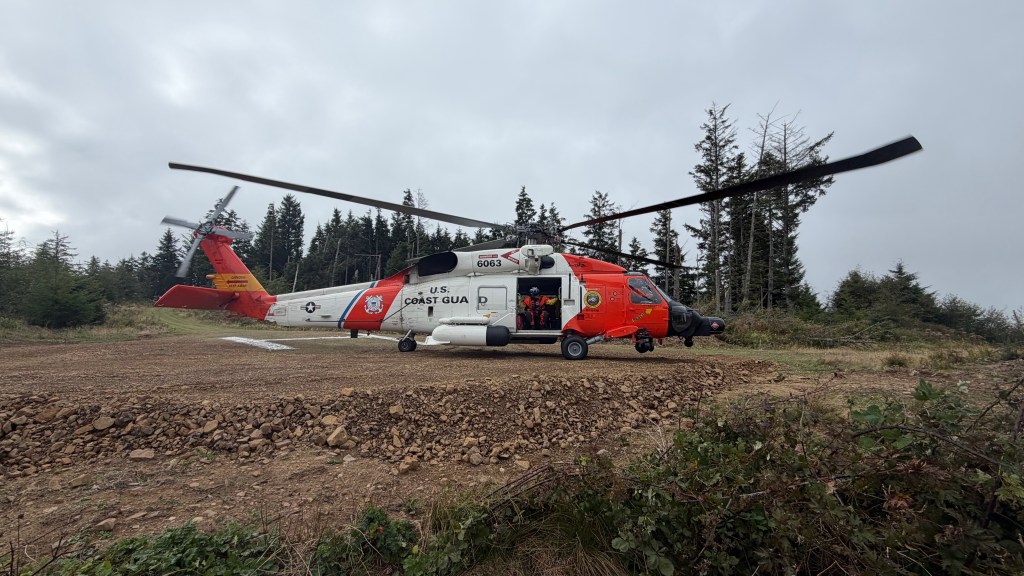
Clatsop County benefits financially in two ways from Arch Cape’s provision of essential public safety services: 1) County-wide tourism is enable through reliable water, sanitation, fire and rescue services, and 2) In fiscal yeaR 2024-2025, Transient Lodging Tax (TLT) generated by Arch Cape accountED for 32.7% the County’s oversall TLT budget.
If Arch Cape were no longer able to reliably provide these Public Safety services, tourism-related revenue and essential support for Fire and Rescue operations would be at risk, placing additional financial pressure on County Public Safety and other services.
In the past, state legislation called for TLT revenue to be used to fund city or county services. Now, State legislation (Oregon HH 4148) that was signed into law in April 2026 allows the County to spend TLT revenue on services (“emergency or nonemergency”) that are provided by “a special district in lieu of the city or county”, such as the Arch Cape Water and Sanitary Districts.
It is therefore reasonable for Clatsop County to share in the cost of maintaining the water, sanitation and rescue infrastructure that helps sustain tourism, generates County revenue, and supports public safety. An allocation of Arch Cape-generated TLT revenue to the Arch Cape Water and Sanitary Districts is legislatively sanctioned, warranted and increasingly necessary.
Without an allocation of Arch Cape-generated TLT, or another source of additional revenue, the increasing cost of maintaining reliable water, sanitation services—assuming adequate staffing can be secured—will continue to fall primarily upon Arch Cape ratepayers.
3. Steps to Reduce Vulnerability
At the Board meetings, steps were outlined that are being taken in the following directions.
a. Develop and formally document an operations contingency plan.
Determine and formally document the notification and continued operations strategy for the water and wastewater systems if Matt became unavailable because of illness, injury, resignation, family emergency, or any other circumstance.
b. Prepare for the administrative transition.
Work with Collin (the current Administrator) to identify the administrative responsibilities that he would be willing to continue performing on a contract basis after June 2027 and to clearly identify the remaining responsibilities that must be filled.
Develop and advertise RFP(s) for both sets of responsibilities well before Collin’s current contract expires. Given the difficulty encountered during the previous search for an Administrator, waiting until the end of the contract would unnecessarily increase the risk of the business function not being done.
c. Develop a sustainable mid and long-term staffing model.
Examine alternatives to the current “in house” staffing model rather than assuming that qualified individual will eventually appear.
Options should include, but may not be limited to:
- Substantially increasing compensation and considering subsidized housing and/or a signing incentive to attract a qualified operator;
- iIdentifying private companies capable of operating the water and wastewater facilities under contract; and
- Exploring partnerships or joint operating arrangements with neighboring communities and special districts facing similar staffing challenges.
There may be other alternatives as well. The objective should not be to defend any particular staffing model. It should be to determine what staffing model can reliably provide water and wastewater service to Arch Cape.
These are significant issues that the community will need to address together. The volunteers who serve on our Water and Sanitary Boards are working to address these issues but cannot resolve them alone. They will need the engagement, support, and collaboration of the broader Arch Cape community as they work toward solutions that will sustain these essential services.
Board Meeting Updates
1. Allocation of Arch Cape-Generated TLT Revenue to Arch Cape for its Public Safety Services (Click to see June edition of The Current)
Progress: A meeting between the District Board Chairs, the District Administrator and the County which was supposed to be held this month is being rescheduled for November or December at the County’s request.
2. Cannon View Park’s request for a partial refund of District Administrator Levy (Click to see August edition of The Current – second article)
The Sanitary District Board voted 5-0 to deny the refund request from Cannon View Park.
3. Consolidate Water District & CVP water: Forming a committee to assess (Click to see March edition of The Current – second article)
Formation of the Committee is still underway.
Homeowner Tips & Tricks: Monitoring Household Water Usage
Some Arch Cape homeowners have been surprised by unusually high water bills caused by undetected leaks or malfunctioning irrigation and sprinkler systems.
A few homeowners have suggested that the Water District invest in technology to monitor water usage at individual homes and alert homeowners when their consumption exceeds a certain level. Others would prefer that the District not incur the cost of technology from which they may receive little or no benefit.
The good news is that homeowners now have the option of purchasing this technology themselves, allowing those who want to monitor their water usage to do so without passing the cost on to all District ratepayers.
Moen, Kohler, Phyn and others have products that monitor household water usage, detects potential leaks, sends alerts through a smartphone app, and can automatically shut off the water to help prevent costly damage. Their effectiveness, particularly in detecting irrigation system leaks, depends on where the device is installed relative to the irrigation plumbing. Click here to see Moen Flo Smart, Phyn Plus Smart, Kohler H2Wise
These products give homeowners a range of options to meet their individual needs without requiring a District-wide investment.
Repairing the Aging Underground Infrastructure: Manholes – Matt Gardner
The District’s underground sewer infrastructure is more than 40 years old and is showing its age. As manholes and sewer pipes deteriorate and develop cracks, stormwater seeps into the sewer system rather than draining naturally into the groundwater, creeks, or ocean.
This stormwater mixes with raw sewage and must be pumped to the wastewater treatment plant for processing. Click here to learn how the District’s wastewater treatment system works.)
The impact of stormwater in the sewer system is substantial:
- During dry summer months, the wastewater treatment plant processes approximately 69,000 gallons of wastewater per day.
- During the winter months, that volume, due to the influx of stormwater, increases to approximately 250,000 gallons per day on average —nearly three times as much as without the storm water. Mid to late winter after ground saturation has occurred and during significant rain events, it is not uncommon for those average daily flows to increase to 350,000 gallons per day average and have peaked at 627,000 gallons per day.
This additional volume accelerates wear and tear on pumps and the membrane treatment system itself, and requires additional operator time to monitor and adjust the biological treatment process. The result is higher operating costs, which ultimately translate into higher rates for property owners.
To reduce these costs, protect the treatment system, and meet State environmental regulations, the District must continually repair its aging underground infrastructure to reduce stormwater inflow and infiltration.
Identifying and Repairing Deteriorating Manholes
Each year, District staff inspect the sewer manholes, manually removing their covers to assess their condition and identify signs of deterioration. (There are approximately 110 manholes across the District.) Repairs are then prioritized based on the severity of the damage.
The following videos show myself and Collin repairing a single manhole which took 1 full day. This particular manhole was selected for two reasons: the damage was significant, and District staff could safely perform the repairs without hiring a contractor. More extensive repairs, particularly those requiring work deep underground, must be performed by specialized contractors for safety reasons.
How the District’s Excavator Is Reducing Repair Costs
In previous years, District staff could repair the inside of a manhole, but repairs to the outside required scheduling and hiring a contractor.
Now that the District owns an excavator, staff can access and repair both the inside and outside of suitable manholes themselves.
This allows the District to complete repairs more quickly, reduce reliance on outside contractors, and lower costs to ratepayers.
Video Sequence Shows:
1. Initial process of cutting aware the blacktop to reveal the manhole (Click here and then on the picture)
2. Deterioration of the exterior of the manhole (Click here and then on the picture)
3. Deterioration of the interior of the manhole (Click here and then on the picture)
4. Finished repair of the interior of the manhole (Click here and then on the picture)
5. Finished repair of the exterior of the manhole (Click here and then on the picture)
6. Shrink wrapping of the manhole (Click here and then on the picture)
7. Final look (Click here)

